CASE STUDY 06
RTO
SHIPBUILDING & MARINE ENGINEERING
Offshore platform schedule optimisation
A leading Korean shipbuilder · offshore platform yard · 2025 · pilot
CHALLENGE
- Offshore platform construction schedules carry dense precedence, resource and spatial constraints, and slip expensively.
- The baseline plan was built to be defensible rather than optimal, with float distributed by judgement.
- Manpower and equipment utilisation were uneven across the programme, but the imbalance could not be quantified against an alternative.
SOLUTION
- RTO applied to the client's baseline plan to generate an optimised schedule under the same constraint set.
- Minimal-tardiness and minimal-makespan objectives evaluated separately, then jointly against resource-balancing objectives.
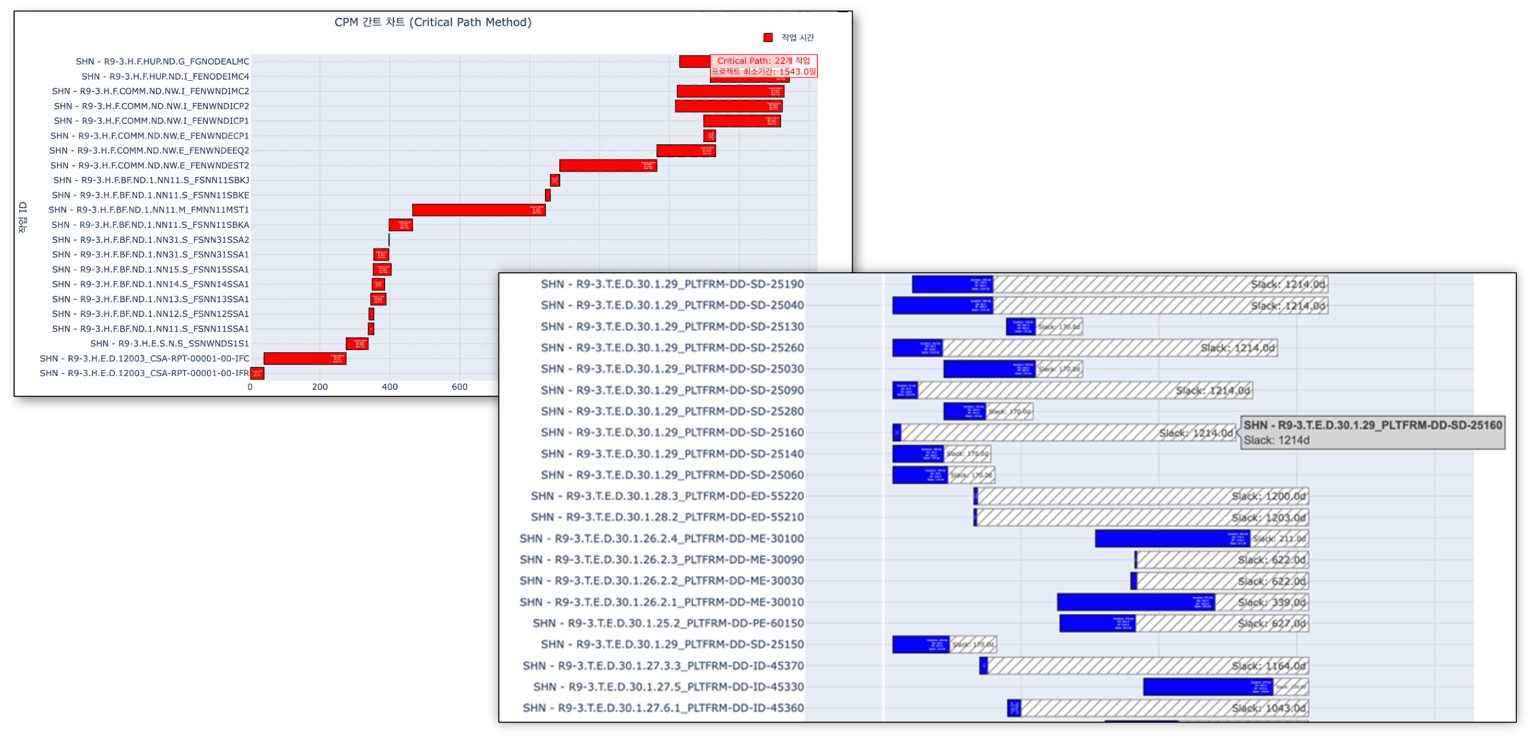
- Critical path, bottleneck and causality analysis produced alongside the schedule, so the binding constraint is explicit.
RESULTS
- Delay and tardiness reduced by transforming the baseline plan rather than replacing the client's planning process.
- Resource utilisation balanced across manpower and equipment within the same delivery envelope.
- Bottleneck and causality analysis identified where additional capacity would and would not change the outcome.